Does HEPES produce hydrogen peroxide under light?
A buffer. Under light it also helps make hydrogen peroxide, and whether that matters depends on how many cells are there to clear it.
HEPES is the buffer in many cyanobacteria and algae recipes. It stops the pH drifting as cells make the water around them more acid.
And yes, under light it helps make hydrogen peroxide. That has not been in dispute since the mid-1980s (Zigler et al., 1985). The useful question is when it matters.
What is known
Light hits the vitamin B2 in the medium and throws off unstable oxygen molecules that normally vanish in moments. HEPES turns most of them into hydrogen peroxide, which lasts (Liu et al., 2023). Three hours under ordinary bench light gave RPMI with 25 mM HEPES more than ten times the peroxide of the same medium without it, and killed cells.
Buffer choice changes the amount. In lit seawater HEPES made the most peroxide, TAPS among the least. Culture media use 1 to 10 mM, and at that range Prochlorococcus on its own stopped growing when cells were sparse or the light was strong (Morris and Zinser, 2013). At sea, other bacteria clear it (Morris et al., 2011).
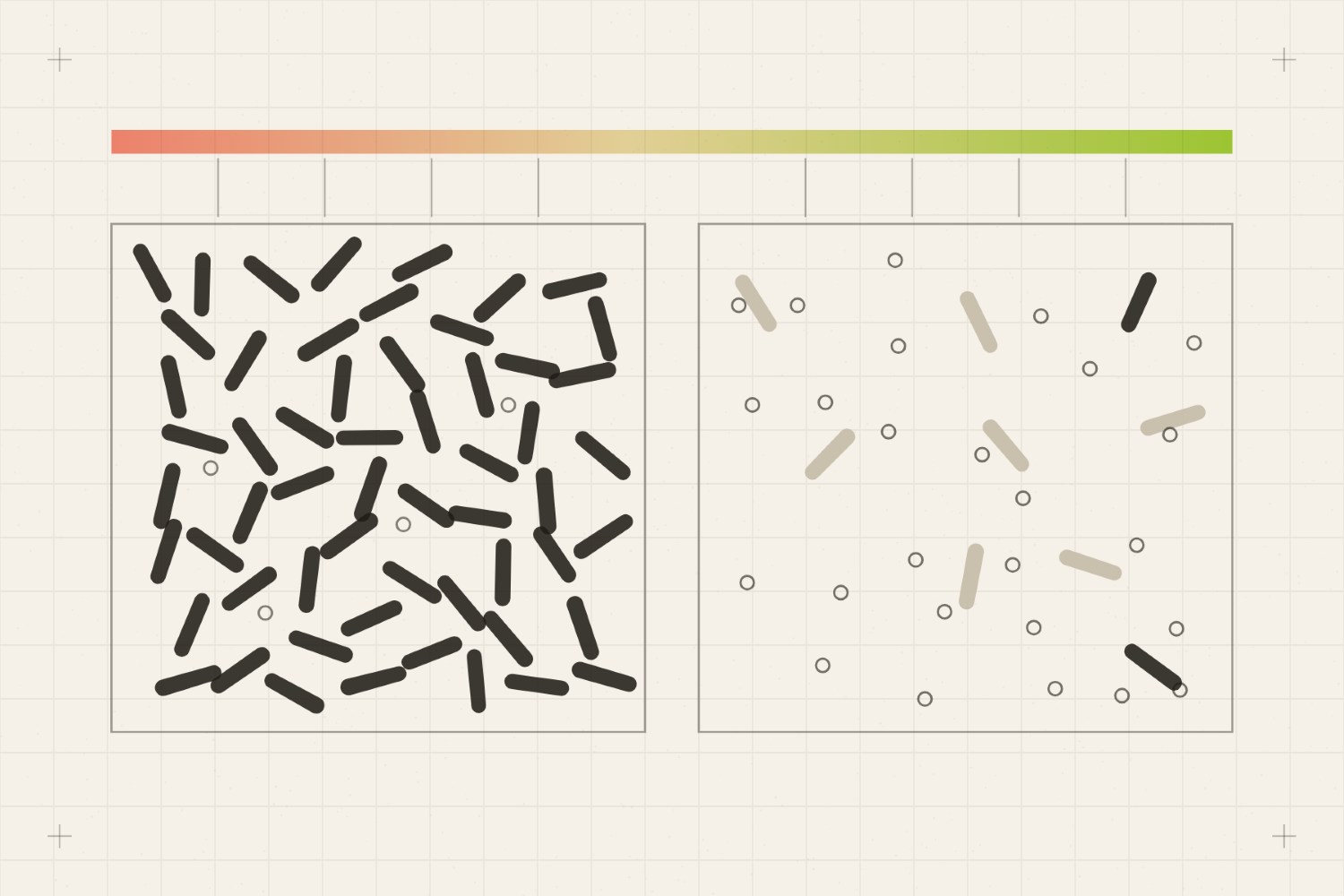
Cell number changes the outcome too. In Synechococcus elongatus PCC 7942, cultures at sixteen million or 3.2 million cells per millilitre grew. At 1.6 million, over nine in ten died in two days. Catalase rescued them, and so did a yeast partner (Li et al., 2017).
What this means for a grown material
Cells clear peroxide themselves, so the outcome balances what the medium makes against what they remove. Cell loading, thickness, porosity, light reach and co-culture all move that balance, making them chemical decisions as much as formal.
Published materials sit in different places. Synechocystis has been grown in alginate beads in 20 mM HEPES under strong light (Tóth et al., 2022). Photosynthesis fell away after a week, but those cells were also salt-stressed and nobody measured peroxide, so nothing there tells you what HEPES did.
“HEPES-containing” tells you nothing about which case you are in.
Protecting the cells
Any of these may help, and they combine.
To learn which one mattered, change one at a time. Cheap aquarium peroxide strips screen around one part per million, unreliably below that.
Where this fits
HEPES is the standing example of control interference: when something added to keep one part of an experiment steady also changes another biologically important part of the system.
Peroxide tolerance, which looked like a property of the organism, belongs to the population and the company it keeps.
Zigler, J. S., Lepe-Zuniga, J. L., Vistica, B., & Gery, I. (1985). Analysis of the cytotoxic effects of light-exposed HEPES-containing culture medium. In Vitro Cellular & Developmental Biology, 21(5), 282-287. doi: 10.1007/BF02620943.
Morris, J. J., Johnson, Z. I., Szul, M. J., Keller, M., & Zinser, E. R. (2011). Dependence of the cyanobacterium Prochlorococcus on hydrogen peroxide scavenging microbes for growth at the ocean’s surface. PLoS ONE, 6(2), e16805. doi: 10.1371/journal.pone.0016805.
Morris, J. J., & Zinser, E. R. (2013). Continuous hydrogen peroxide production by organic buffers in phytoplankton culture media. Journal of Phycology, 49(6), 1223-1228. doi: 10.1111/jpy.12123.
Li, T., Li, C.-T., Butler, K., Hays, S. G., Guarnieri, M. T., Oyler, G. A., & Betenbaugh, M. J. (2017). Mimicking lichens: incorporation of yeast strains together with sucrose-secreting cyanobacteria improves survival, growth, ROS removal, and lipid production in a stable mutualistic co-culture production platform. Biotechnology for Biofuels, 10, 55. doi: 10.1186/s13068-017-0736-x.
Tóth, G. S., Siitonen, V., Nikkanen, L., Sovic, L., Kallio, P., Kourist, R., Kosourov, S., & Allahverdiyeva, Y. (2022). Photosynthetically produced sucrose by immobilized Synechocystis sp. PCC 6803 drives biotransformation in E. coli. Biotechnology for Biofuels and Bioproducts, 15, 146. doi: 10.1186/s13068-022-02248-1.
Liu, P., Sun, J., Peng, W., Gu, Y., Ji, X., Su, Z., Liu, P., & Shen, J. (2023). Zwitterionic betaines over HEPES as the new generation biocompatible pH buffers for cell culture. Bioactive Materials, 24, 376-386. doi: 10.1016/j.bioactmat.2022.12.028.
From the Molecule Up, by Biodesign Academy. Read one living material with care, as a relation you are joining, then meet the next on its own terms.
