Printability is not neutral
Five fabrication decisions that shape the conditions inside a living material.
Raphael Kim · 5 Aug 2026 · Content v1 · 19 min read ·
12 min listen
Mycelium · Printing · Method
In short
In a living-material project, machine and material settings do more than determine whether something can be printed. They also change the conditions experienced by the organism.
A finer grind can reduce spaces for air. A wider line can increase the distance to its centre. A pH selected for paste stability can alter fungal growth and enzyme activity. A binder can become food. None of these effects is automatically harmful. The problem is that they are often not examined.
For biodesign educators, the practical shift is to treat ingredients, machine settings and geometry as parts of one biological system.

In this Reading
19 min · the teaching method is at the end
A printed line collapses as it leaves the nozzle
The obvious response is to refine the paste or machine settings: grind the ingredients more finely, add a thickener, increase line width, or adjust the water and acidity until the material extrudes cleanly.
These are sensible fabrication decisions. They are also biological decisions.
The fungus does not experience a category called “printability.” It experiences a wet environment made from particles, water, chemicals, surfaces and spaces.
A change introduced to improve extrusion may close routes for air. A wider line may prevent cracking while making its centre harder to reach. A binder may strengthen the wet paste and provide the fungus with another substance to digest.
This does not mean fabrication should be sacrificed for biology. It means the two cannot be designed separately.
Particle size, water content, pH, binders, nozzle width, line width, layer height, spacing and geometry decide how a living material is manufactured. They also decide the conditions in which the organism grows, feeds and builds the thing you will use.
The project
Céline Oberholzer, Jennifer Marie Yabut and Ehsan Baharlou investigated whether household waste could be used to produce 3D-printed mycelium panels. Their mixture combined cat litter made from corn and potato with used coffee grounds. The fungus was reishi, or Ganoderma lucidum.
The researchers screened several recipes in dishes, then developed one into a printable paste. During development, the team adjusted several variables to improve extrusion and reduce cracking, bending and separation between layers.
The panels held their shape well enough to become an architectural screen. But after three weeks, the fungus had not grown through their full 2.1-centimetre thickness.
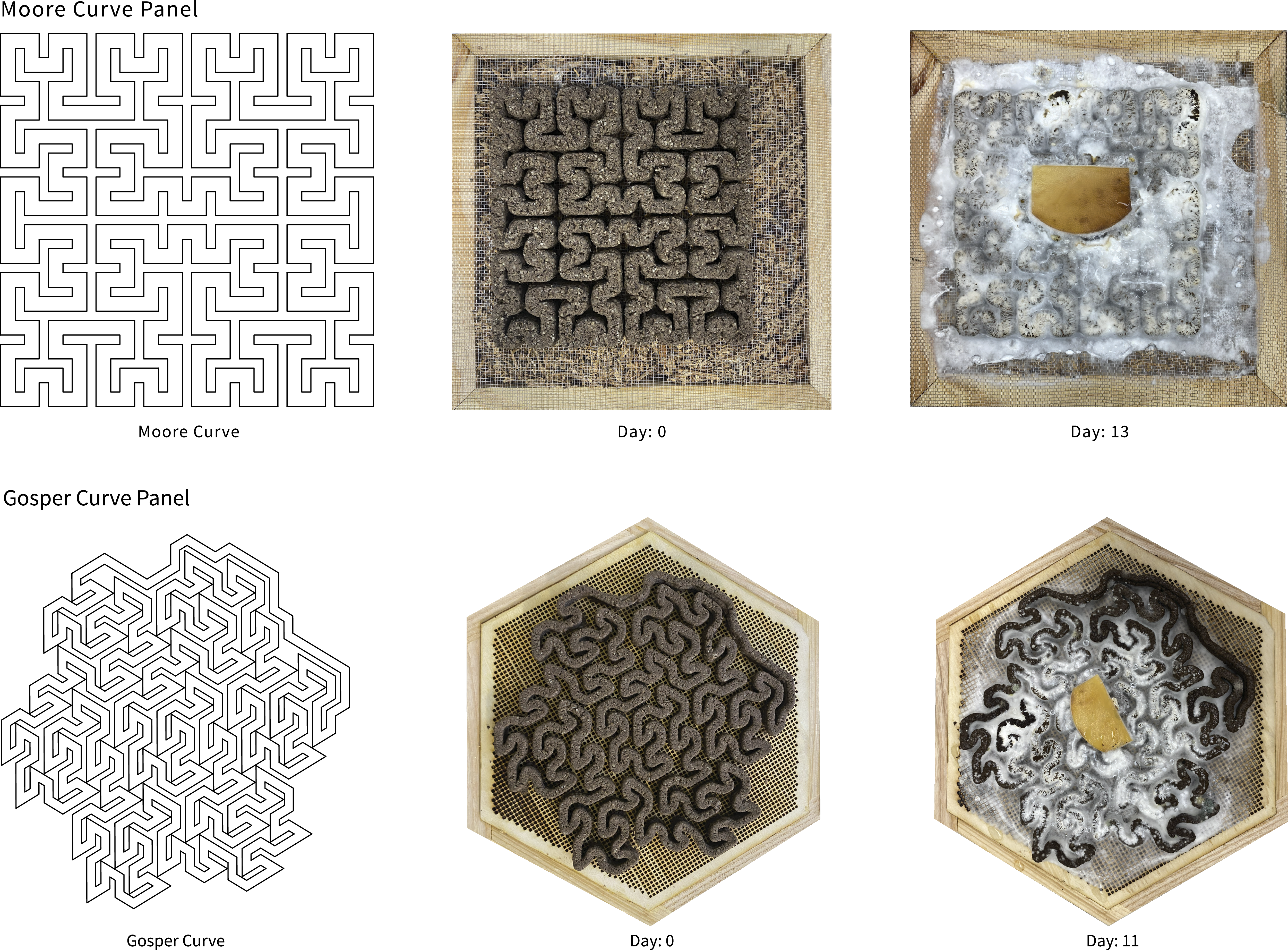
Fig. 1 From printed toolpath to growing panel
The Moore and Gosper prototypes are shown as computational paths, immediately after printing, and after 13 and 11 days of fungal growth respectively. The photographs establish the physical system examined in this Reading: continuous deposited lines, open spacing and visible colonisation around the print. They do not show how fully the fungus reached the interior of each line.
Source: Figure 9 in Oberholzer et al., 2026, Biotechnology Design 4, e34. Reproduced under CC BY 4.0.
The authors proposed longer growth time as one response.
That may be right. It is also worth asking whether the printing process itself helped create the internal limit.
One detail worth holding onto
The fungus was not mixed through the paste. Each panel sat above an inoculated bed, so mycelium had to grow upward into the printed lines. Every question about distance, air and travel in this Reading starts from that arrangement.
Two systems are being designed
A living-material project contains at least two interacting systems. Every major process decision acts on both. It rarely benefits them equally.
System 01
The fabrication system
The material must
Pass through the nozzle
Form a continuous line
Hold several layers
Resist collapse and cracking
Survive handling and drying
System 02
The living system
The fungus must
Receive oxygen
Access food
Release working enzymes
Grow through the material
Connect particles and neighbouring surfaces
No.
Decision
Fabrication purpose
Possible biological consequence
01
Finer coffee particles
Improve extrusion and bonding
Reduce spaces that could hold air
02
Water at 59% by weight
Produce a workable paste
Support hydration while filling internal pores
03
Printed lines about 9 mm wide
Reduce cracking and separation
Increase the distance to the centre
04
pH 5.8 to 6.2
Improve stability and printability
Change fungal growth and enzyme conditions
05
0.8% guar gum
Help the line retain its shape
Add a binder that some fungi may digest
Tab. 1 The third column does not prove harm. It shows the biological questions created by fabrication.
Where the blind spot enters
The researchers avoided further changes to the substrate composition, because they were concerned that this could compromise biological viability. They refined the additive-manufacturing process instead.
That distinction sounds sensible. Ingredients belong to biology; machine settings belong to fabrication. But it does not hold inside a living material.
Particle size, line width, layer height and spacing alter air access, moisture distribution, surface contact and the distance the fungus must travel. The ingredient list may look biological while the printer settings look mechanical. The fungus experiences both.
A material that cannot be fabricated is not useful. But fabrication improvements produce rapid, visible feedback, while their biological consequences may take weeks to appear and remain hidden inside the object.
A print can become more stable while its internal habitat becomes harder to colonise.
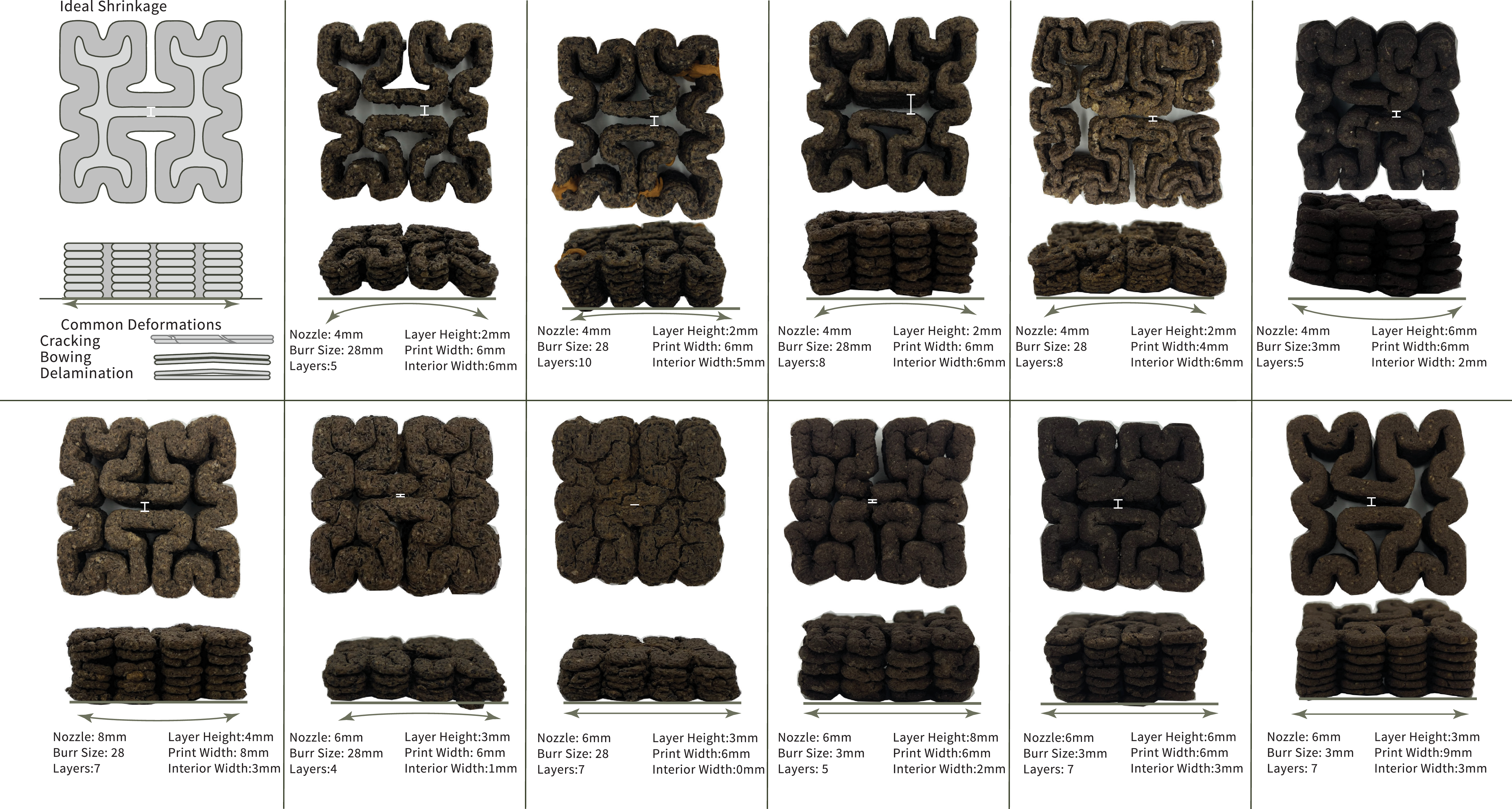
Fig. 2 The fabrication problems that produced immediate feedback
The researchers varied particle grind, nozzle diameter, line width, layer height, number of layers and internal spacing to reduce cracking, bowing and separation between layers. These fabrication effects could be compared visually after printing and drying. The figure does not show what the same settings changed for fungal growth inside the material.
Source: Figure 16 in Oberholzer et al., 2026, Biotechnology Design 4, e34. Reproduced under CC BY 4.0.
The five settings, the evidence levels and the teaching method.
Each setting with its fabrication purpose, its biological question, the published evidence and a cheap classroom test. Membership opens the whole Library, seven shelves, with a new Reading every week.
Still to come in this Reading
01 Grind size
02 Water content
03 Line width
04 Acidity
05 Guar gum
+ The four-question method
The five settings
Each setting is set out the same way: the fabrication problem it solved, the condition it changed for the organism, the evidence that exists elsewhere, and the conclusion that can honestly be drawn.
Grind size is also an aeration setting
Fabrication purpose
Grinding a substrate more finely creates more surface area. That can support fungal digestion, smoother extrusion and stronger contact between printed layers.
Condition changed
Open space. Fine particles pack more tightly, so the material contains less open space. If the remaining gaps fill with water, oxygen must move through liquid rather than through air, where it travels much faster.
Research on solid-state fungal cultivation and mycelium composites identifies dense packing, small particles and high moisture as possible restrictions on gas movement. One study using finely ground rubber wood sawdust found more mycelium near the surfaces than in the centre after three weeks, and linked this to fewer oxygen-filled spaces, although oxygen was not measured directly (Shakir et al., 2025).
Fine grinding is not always wrong. A narrow printed line surrounded by air may remain colonisable even when its particles are small. The same mixture compressed into a thick block may not. The effect depends on particle size, water, compaction and geometry together.
The useful conclusion
Record particle size as an aeration variable, not only as an extrusion variable.
Water is the largest ingredient
Fabrication purpose
Water made up 59% of the printable mixture by weight, the largest single component. Too little can produce a dry, crumbly mixture. Too much can cause slumping.
Condition changed
Hydration, and how much pore space holds water rather than air. Water is essential to growth; too much can also fill air spaces and interfere with growth.
Evidence from mycelium-composite research suggests moisture around 60% can support strong growth in some systems. One rubber-wood-sawdust study found the most growth at 60% moisture and none at 80% (Shakir et al., 2025). That result came from another fungus and substrate, so it is not a universal recipe. It does show why the relationship is not simply “less water is better.”
The project’s 59% therefore appears biologically plausible. The more important question is how it was chosen.
In material projects, water content is often set by
How much water the ingredients hold
Whether the paste mixes evenly
Whether it passes through the nozzle
Whether it retains its shape
That value may also support fungal growth, but without comparison it is difficult to tell whether it was optimal, acceptable or accidentally successful.
The useful conclusion
A fabrication-led decision does not necessarily harm the organism. It creates a biological consequence that may not have been examined.
Line width sets the distance to the centre
Fabrication purpose
The researchers increased the nozzle width from 4 to 6 millimetres and the deposited line became about 9 millimetres wide. This reduced cracking, deformation and separation between layers.
Condition changed
It placed the centre of the line roughly 4.5 millimetres from the nearest side surface. In additive manufacturing, line width is usually treated as a setting for resolution, print speed, stability and adhesion. In a living print, it may also set the distance between an exposed surface and the interior.
A study of damp solid-state cultivation found no measurable oxygen only 0.1 millimetres below its material’s surface (Oostra et al., 2001). The systems are not directly comparable, so this is a warning about scale, not proof that the printed line became oxygen-free.
The number does not tell us how much oxygen reached the centre. Air may have entered through internal channels or the ends of the line. What line width creates is a transport question, not a verdict.
The question line width creates
How far must oxygen and fungal growth travel before reaching the centre of the deposited material?