What citric acid reveals about bacterial cellulose
Role overshadowing: when the job we assign an ingredient is correct, and its correctness is what stops us looking any further.

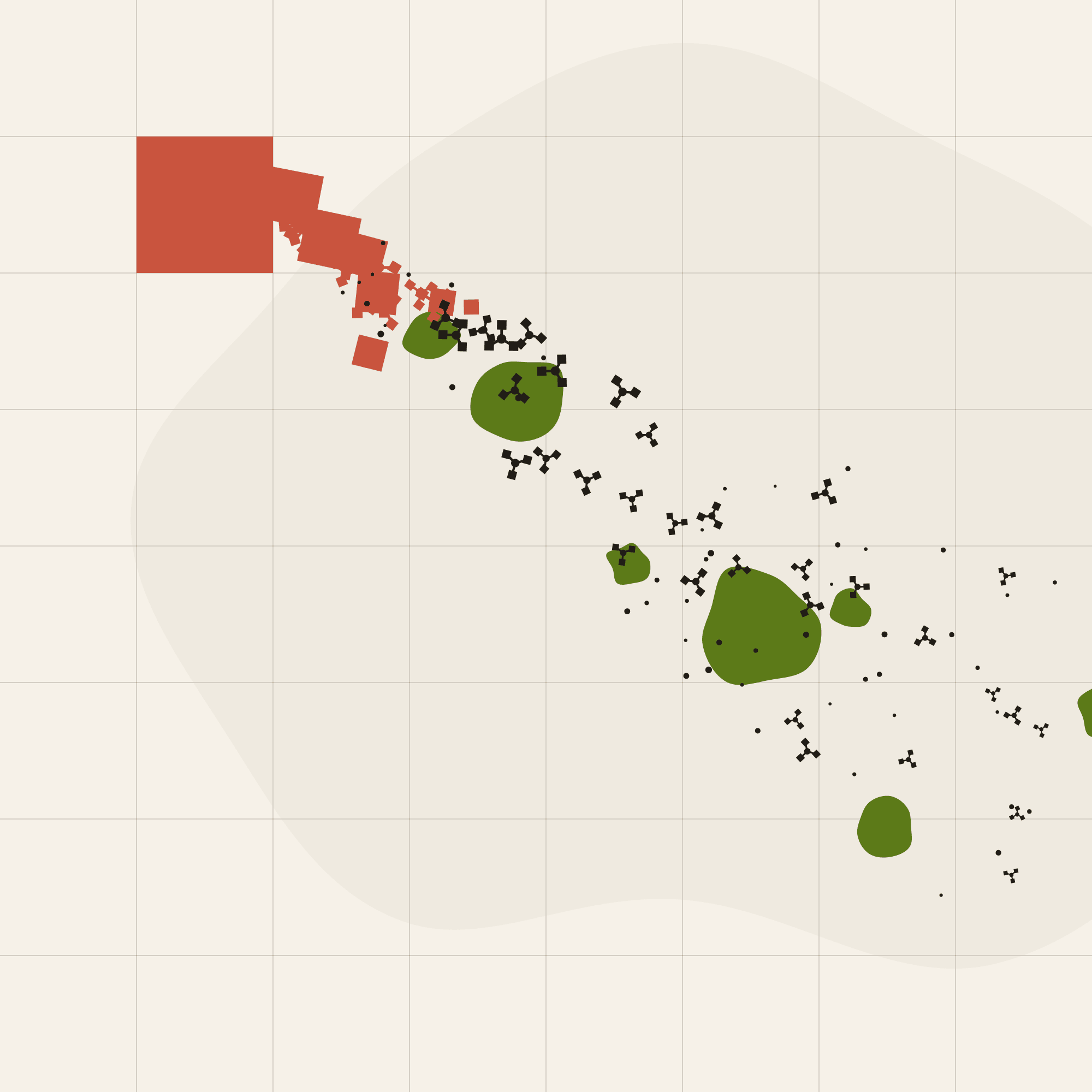
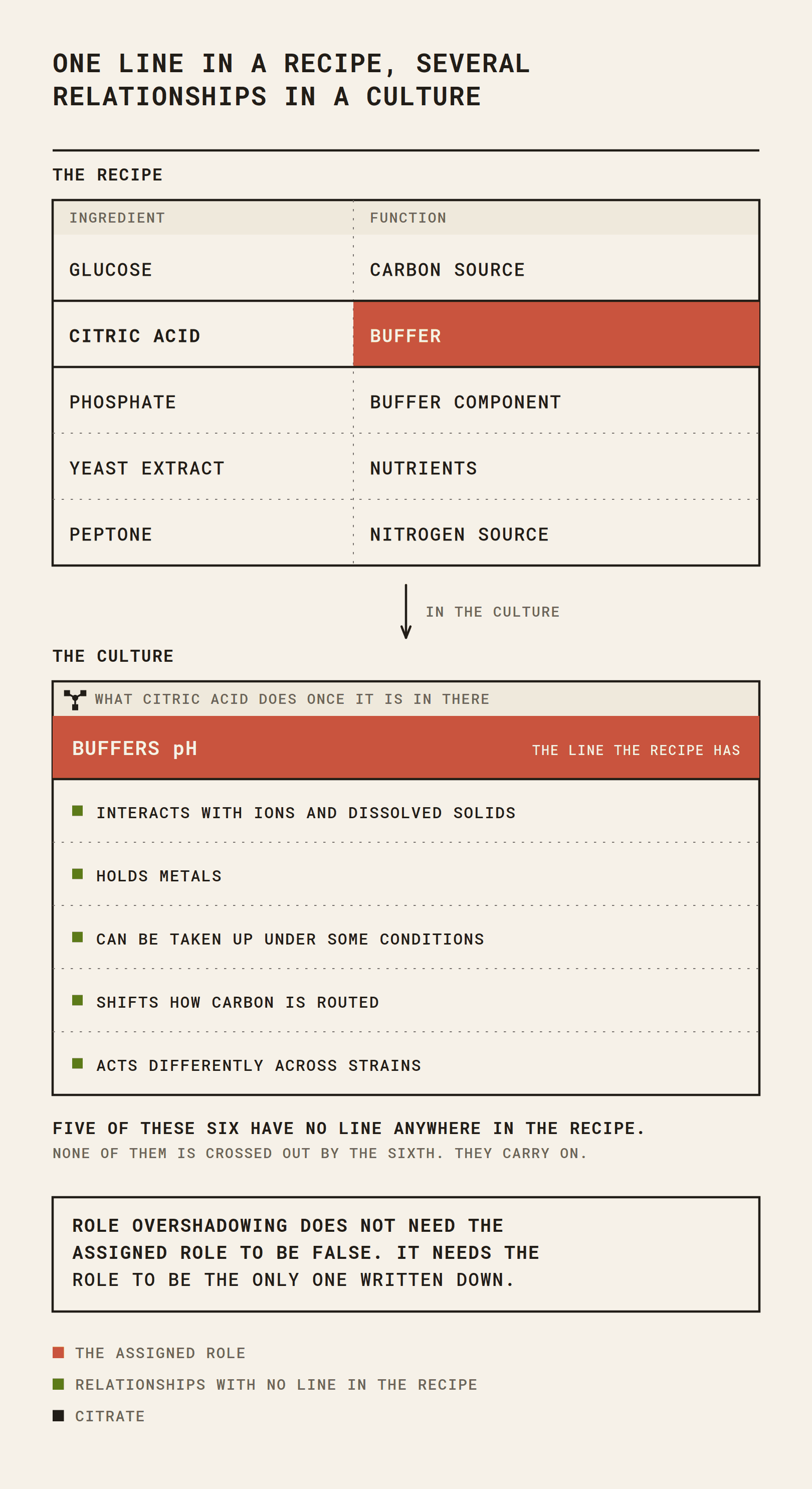
Citric acid sits in the standard recipe for growing bacterial cellulose, and every protocol that gives it a job calls it a buffer. That is chemically true. It is also the only thing most protocols say about it.
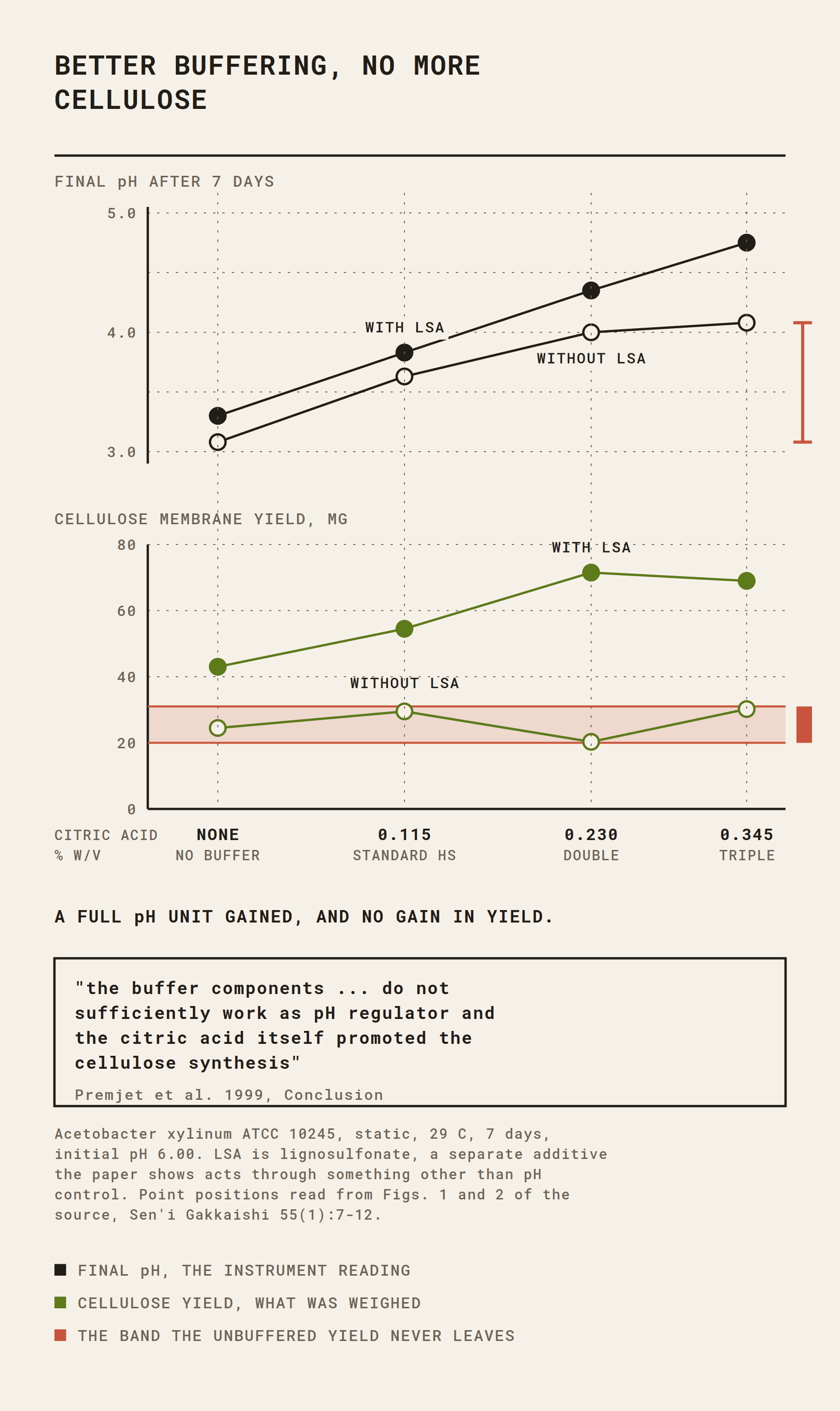
In 1999 a group working across Thailand and Japan tested it. They raised the buffer level until the pH held a full unit better, and the cellulose yield did not move. Their conclusion says the buffer components “do not sufficiently work as pH regulator” and that the citric acid itself promoted the synthesis. Nobody downstream picked that up. The label carried on.
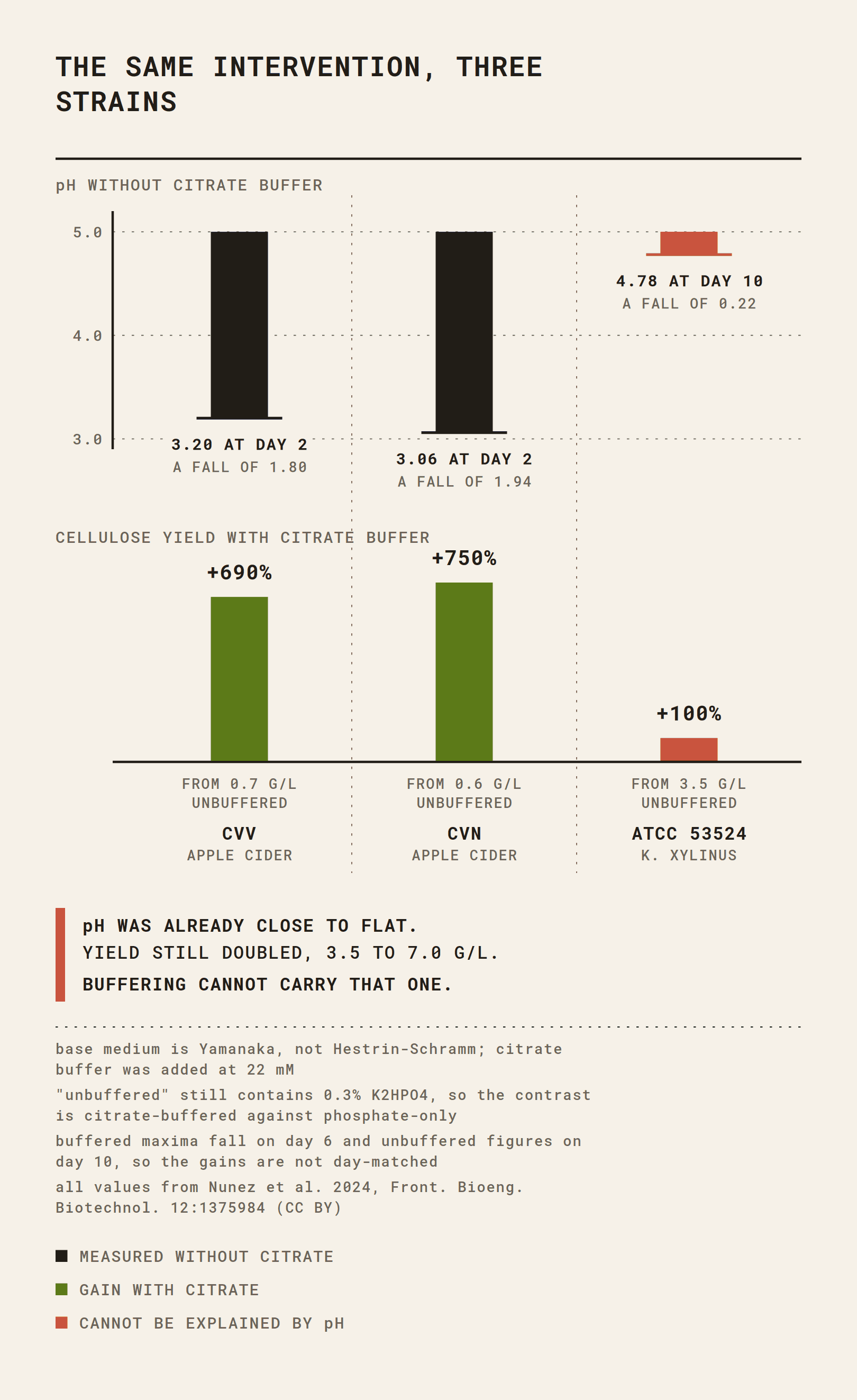
In 2024 a strain whose pH barely dropped still doubled its yield when citrate went in. Whatever citrate is doing, pH does not cover it. I call this role overshadowing. Swap the ingredient and you have changed the environment, even when the meter reads the same.
There is a short, free explainer of the term, written for someone arriving without the full case: Can I replace citric acid in a bacterial cellulose medium?
A bacterial-cellulose recipe can look reassuringly modular.
This is useful. Recipes have to simplify biology to make it workable. The problem starts when a label is correct enough that we stop asking what else might be happening.
Citric acid is a good example. In bacterial-cellulose media, citrate and phosphate can help control pH. The researchers behind the classic Hestrin-Schramm medium clearly understood this buffering chemistry (Hestrin & Schramm, 1954). So if a protocol describes citrate as part of the buffer system, that is not necessarily wrong.
But several design decisions can follow from that description.
Replace citrate if another buffer maintains the same pH.
Increase citrate if the culture becomes too acidic.
Automate citrate dosing according to a pH sensor.
Ask an optimisation system to find an equivalent buffer.
All are reasonable if buffering captures everything about citrate that matters to the culture. The evidence suggests it does not. The buffering role is chemically legitimate. But once citrate enters a living culture, buffer is no longer a complete description.
The organism encounters a molecule, not a recipe label.

The buffer works, but that does not explain the culture
Hestrin-Schramm medium, one of the best-known formulations for growing bacterial cellulose, contains glucose, peptone, yeast extract, disodium phosphate and citric acid, starting at around pH 6 (Hestrin & Schramm, 1954). A useful experiment by Premjet and colleagues later treated citrate and phosphate explicitly as the buffer system and investigated what happened when those components were changed (Premjet et al., 1999).
A simple model might predict: better buffering, so better pH control, so better growth conditions, so more bacterial cellulose. That is not what happened.
Under their conditions, standard HS medium started at about pH 6 and fell to roughly pH 3.7. More importantly, changing citrate and phosphate produced different effects on cellulose production. Improving the buffering conditions did not simply produce more cellulose (Premjet et al., 1999).

The distinction matters.
The first does not automatically establish the second. Premjet and colleagues suggested that metabolism, the chemical processes through which an organism uses nutrients and produces energy and material, might help explain some of the differences. But they did not fully establish one mechanism.
A correct account of why an ingredient was added does not necessarily explain everything that happens after it enters a living system.
The role does not need to be false. It only needs to become so convincing that we stop looking beyond it.
Better pH control changes other things too
A 2021 study using Komagataeibacter hansenii makes this problem even clearer. Li and colleagues compared different buffer systems and concentrations. At relatively low ionic strength, substantial cellulose could still be produced even though the culture acidified considerably. When buffer concentrations were increased enough to stabilise pH more strongly, cellulose synthesis could collapse (Li et al., 2021).
The important point is that the experiment did not isolate pH as the only thing changing. Increasing buffer concentration also changed the ionic environment of the culture. So the study should not be read as evidence that citrate itself suppresses bacterial cellulose. In fact, one of the lower-ionic-strength phosphate conditions still contained citrate and produced substantial cellulose.
Optimising one measurable parameter can change other parts of the biological environment at the same time.
That is a design principle far beyond citrate. We often make substitutions by matching one measurable property: same pH, therefore equivalent medium; same moisture, therefore equivalent substrate; same stiffness, therefore equivalent scaffold.
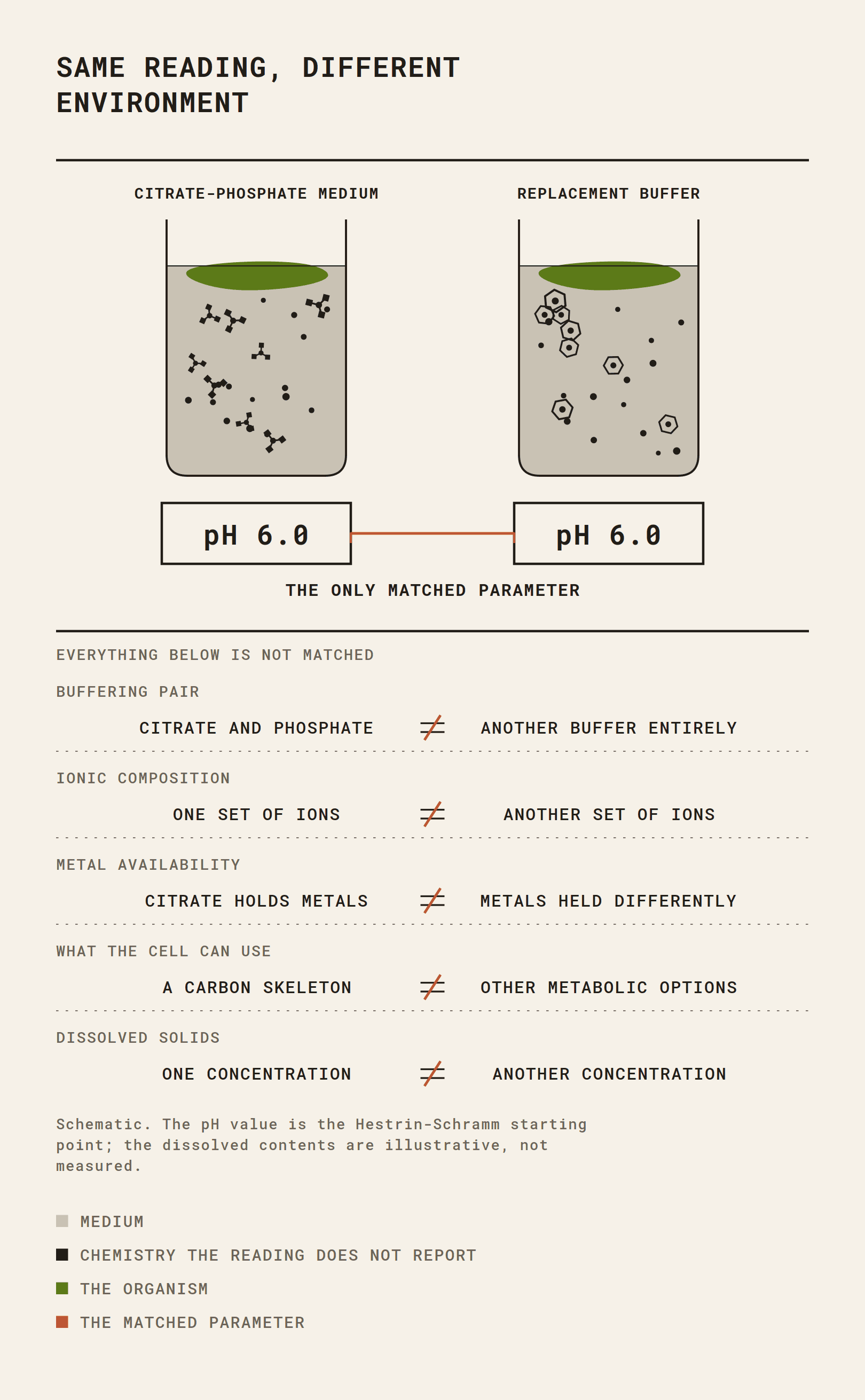
Matching parameters is essential in experiments. But matching one parameter does not make two biological environments identical. A pH meter tells us something important about a medium. It does not tell us which molecules are available to the organism, which ones it can use, how concentrated the dissolved salts are, or what other chemical relationships have changed.
So if we replace citrate-phosphate with another system that maintains exactly the same pH, we may still have changed:
which molecules are available;
the salts and ions in the medium;
access to some metals;
the concentration of dissolved material;
what the organism can use or process.
The replacement may work perfectly well. It may even work better. But it is not biologically neutral simply because the pH matches.

Citrate is not only encountered as a buffer
There is another reason to resist treating citrate purely through its pH-control role. Bacterial-cellulose-producing organisms can interact with citrate biologically. Geyer and colleagues reported that Acetobacter xylinum could use citrate in Schramm-Hestrin medium, particularly in late-phase cultivation (Geyer et al., 1994).
That means citrate is not always just background chemistry. But this creates another tempting simplification. If “citrate = buffer” is incomplete, perhaps the correction is citrate = carbon source. That is no better.
Earlier work by Gromet-Elhanan and Hestrin showed that A. xylinum used different organic acids very differently, and citrate was a relatively poor food source under some conditions (Gromet-Elhanan & Hestrin, 1963). Later experiments involving sodium citrate and ethanol also suggest that citrate can affect how the organism processes carbon, but they do not prove one simple pathway from citrate to more cellulose (Li et al., 2012).
What citrate does depends on the organism and the conditions. Replacing one dominant label with another merely repeats the problem.
Strain matters
A 2024 study comparing several Komagataeibacter strains illustrates this especially well (Núñez et al., 2024). For two isolates, citrate buffering reduced strong acidification and greatly improved bacterial-cellulose production. Here, buffering clearly mattered.
But another strain behaved differently. Its unbuffered culture already maintained a relatively stable pH, yet adding citrate still roughly doubled cellulose production.
A citrate effect is not always the same thing as a pH effect.
The study does not tell us exactly why. That uncertainty is useful. It reminds us that “bacterial cellulose” is not one fixed biological system. Different strains of the bacteria that produce it can respond differently to the same conditions. Change the strain and the same recipe can behave differently. Change the medium and the same strain can behave differently. The material category can hide the living organism underneath it.

A recipe substitution is an ecological intervention
This becomes especially important when bacterial cellulose moves from straightforward laboratory cultivation into biodesign. Designers may change recipes because an ingredient is expensive, unavailable, unsuitable for a fabrication process, difficult to pump, or inconvenient in a workshop.
It is tempting to think in terms of interchangeable jobs: buffer for buffer, carbon source for carbon source, thickener for thickener. But the organism does not experience jobs. It experiences an environment, and changing one ingredient changes part of that environment.
This matters when bacterial cellulose is being grown around textiles, through membranes, into filaments or within robotic fabrication systems (Morrow et al., 2023; Eichinger et al., 2022). Here the culture recipe is no longer just a biological recipe. It becomes part of the fabrication system. If medium composition changes growth rate, shape or timing, that can affect when a machine acts, when a scaffold becomes covered, or when the material is ready to handle.
A small recipe assumption can therefore become a design decision.
From mechanism accretion to role overshadowing
This Reading follows an earlier investigation into gypsum in mycelium cultivation. You do not need to have read that piece to understand the distinction.
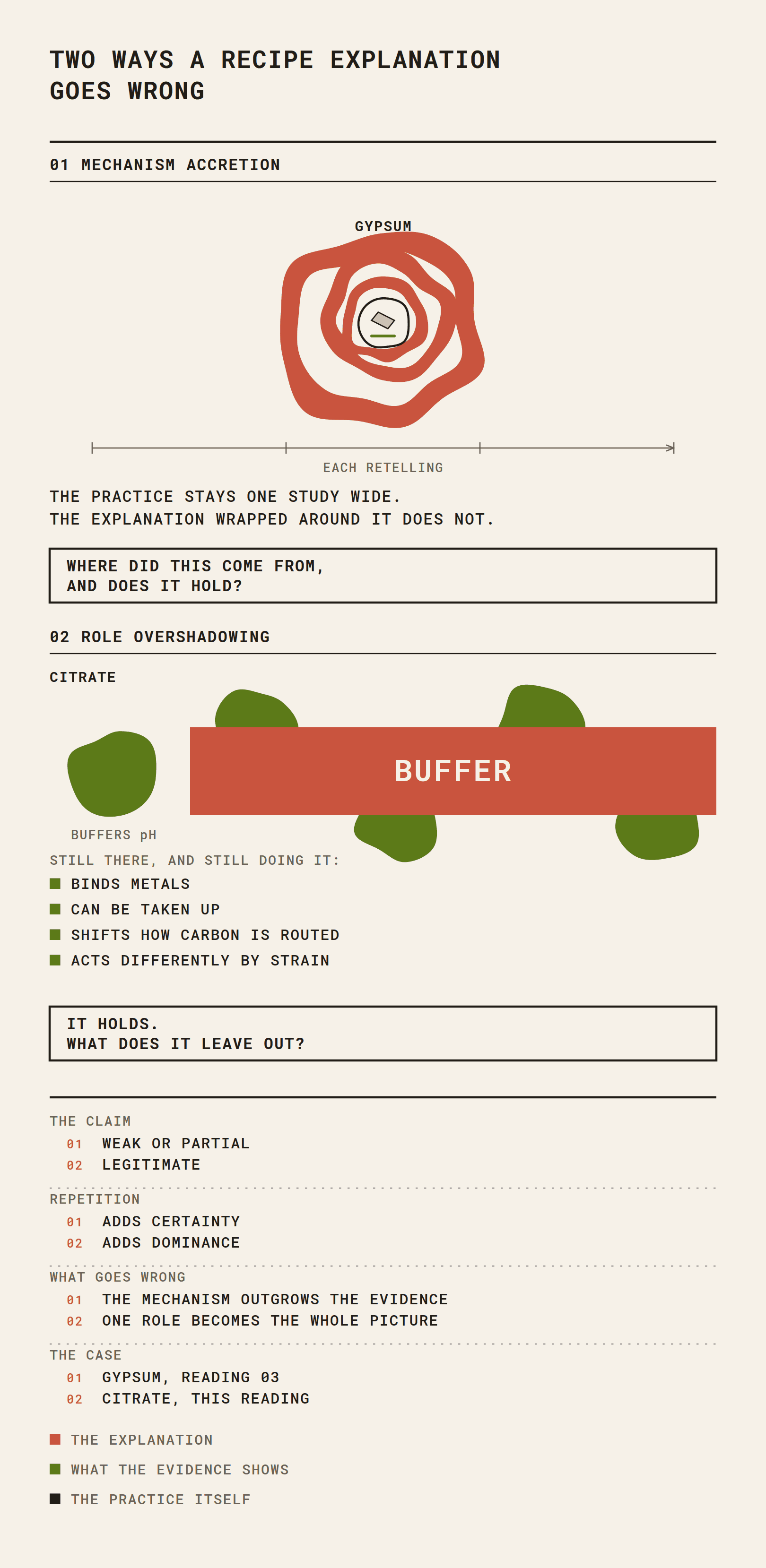
The gypsum investigation started with a familiar recipe claim: that adding gypsum to mushroom or mycelium substrate reduces or regulates pH. Tracing that explanation backwards revealed a problem. Gypsum certainly had a long history of use, but the increasingly specific pH explanation attached to it was much harder to support. As recipes and explanations were repeated, additional certainty and mechanistic detail accumulated around the ingredient.
Mechanism accretion occurs when repeated explanations accumulate layers of mechanistic certainty beyond what the underlying evidence can support.
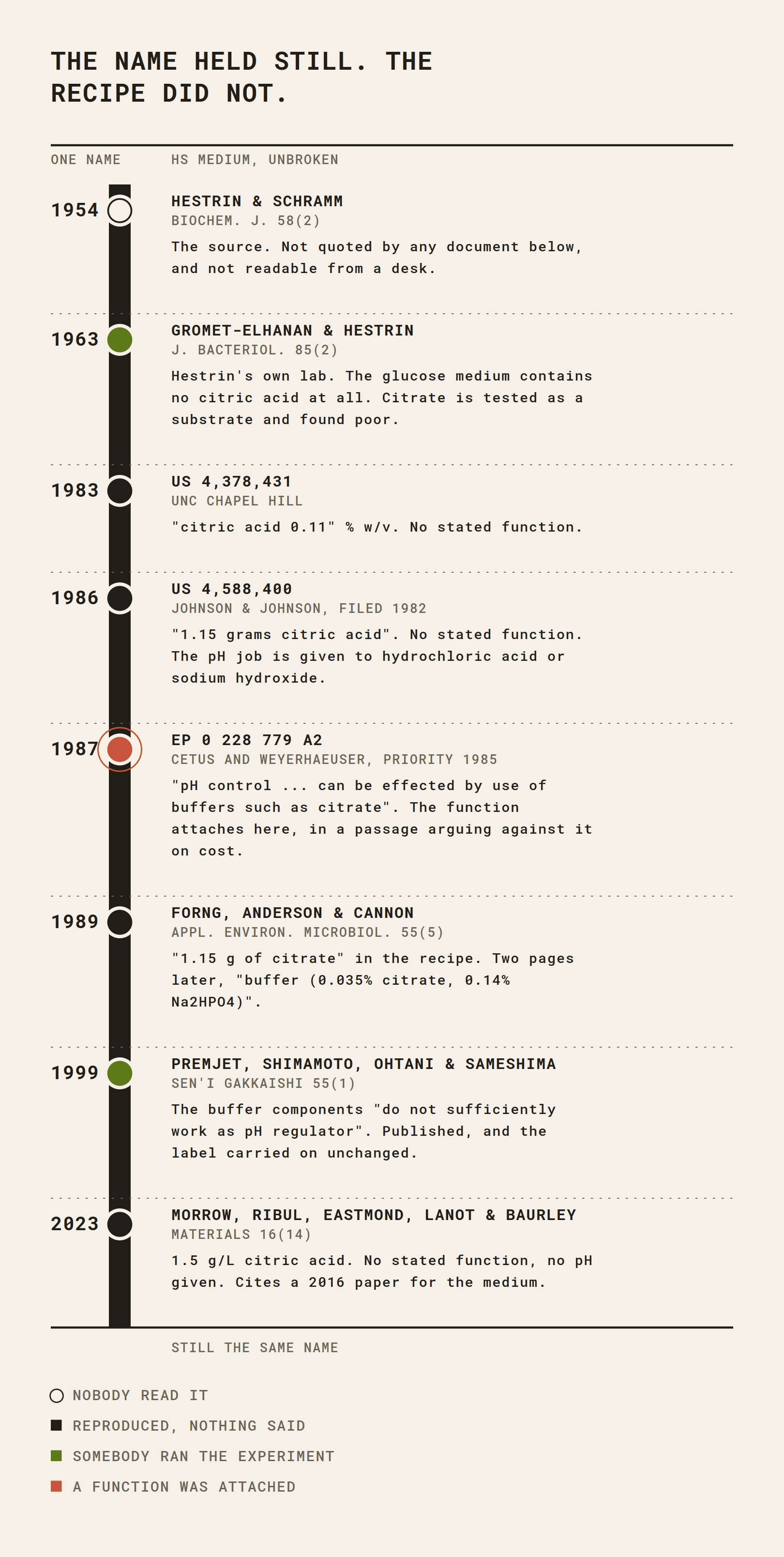
Citrate initially looked as though it might be another example. It is not. Hestrin and Schramm's 1954 bacterial-cellulose work includes the familiar combination of glucose, peptone, yeast extract, disodium phosphate and citric acid (Hestrin & Schramm, 1954). Their growth-medium recipe does not neatly assign a job to every ingredient. But elsewhere in the same work they explicitly use phosphate-citrate buffer at pH 6. So there is little basis for arguing that citrate's buffering role is a later mechanistic story built on weak foundations. The chemistry was understood.
The recipe then travelled. A Johnson & Johnson patent filed in 1982 and published in 1986 reproduced the HS formulation, including 1.15 g/L citric acid, without explaining citrate in detail (Ring et al., 1986). A later patent explicitly discussed citrate among buffers used for pH control in bacterial-cellulose cultivation (Ben-Bassat et al., 1987). By 1999, Premjet and colleagues were explicitly describing citrate and phosphate as buffer components and testing their effects (Premjet et al., 1999).
The full trace, document by document, with what each one states about citric acid and what it justifies, is deposited as a dataset: https://doi.org/10.5281/zenodo.21985658
There is no obvious misinformation chain here. Instead, citrate exposes a different failure mode. With gypsum, an explanation became more certain as it travelled. With citrate, a correct explanation can become so dominant that we stop asking what else is happening.
The two can look similar in a recipe because both eventually produce a neat ingredient-function pairing. But they require different questions.

When protocols enter design, what becomes visible?
A design paper may be investigating a filament, garment, membrane or robotic process. The growth medium is necessary infrastructure rather than the main research question. That is reasonable. But biological assumptions can become quieter as fabrication becomes more visible.
Morrow and colleagues, for example, investigate bacterial cellulose grown directly into filament form. Their paper reports an HS formulation containing 1.5 g/L citric acid, rather than the roughly 1.15 g/L commonly reproduced from the historical formulation (Morrow et al., 2023). The difference should not automatically be treated as an error. Nor should its origin be assigned to Morrow without tracing the formulation further upstream.
The label “HS medium” can remain stable while the recipe attached to that label changes.

Protocol names can give an impression of continuity that the detailed formulations do not always deserve.
A recent study of fungal biodesign education makes the wider translation problem particularly visible. Mastalerska-Scholz, Duda and Gennett (2026) studied a mixed-background biodesign course and found that conventional laboratory protocols often assume knowledge that novice designers do not yet have: how to recognise contamination, judge whether a procedure has worked, or interpret unexpected growth. The authors describe this as part of a wider mismatch between laboratory procedures and novice practitioners in transdisciplinary education.
Their response is the Biodesign Manual: a visual, assembly-manual-like version of the laboratory protocol designed to help non-biologists follow biological procedures more independently. The manuals are intended as scaffolds rather than replacements for instruction or supervision. Crucially, the authors say that the aim of this simplification is not to reduce biological complexity. It is to make procedural knowledge easier to access.
When we translate biological knowledge into something easier to act upon, what do we choose to make visible?
A manual can successfully explain what to do while a label such as citric acid: buffer still quietly shapes what we think the ingredient does. This is not an argument against simplifying protocols. It is an argument for being more deliberate about what survives the simplification.
The same issue becomes more consequential when bacterial-cellulose growth is coupled to membranes and industrial robotics (Eichinger et al., 2022). Once cultivation becomes machine-mediated, assumptions within the recipe can influence the fabrication process itself.
SCOBY does not escape the problem
Many biodesigners do not use HS medium at all. They work with SCOBY cultures, plant infusions, sugar, starter liquid and acids. Recent biodesign research has begun treating the medium itself as something that can be designed rather than neutral background infrastructure. Different plant sources and concentrations can produce different growth and material outcomes (Sicher, 2026; Sicher & Conterno, 2026).
Mixed microbial cultures make the one-ingredient, one-role model even harder to sustain. Changing the medium changes the environment in which several kinds of microorganisms live together.
The broader educational problem is therefore not that biodesigners incorrectly believe citrate is a buffer. There is little evidence for that. The deeper issue is that we tend to teach biologically active ingredients through the single role that matters most to the recipe. That makes protocols easier to understand. But it can also make ingredients appear more interchangeable than living systems allow.
A better way to read a biological recipe
The Biodesign Manual work offers a useful starting principle: information that an experienced laboratory practitioner carries implicitly often needs to be made visible when a protocol is handed to a novice (Mastalerska-Scholz et al., 2026). The same principle can be applied to ingredient roles.
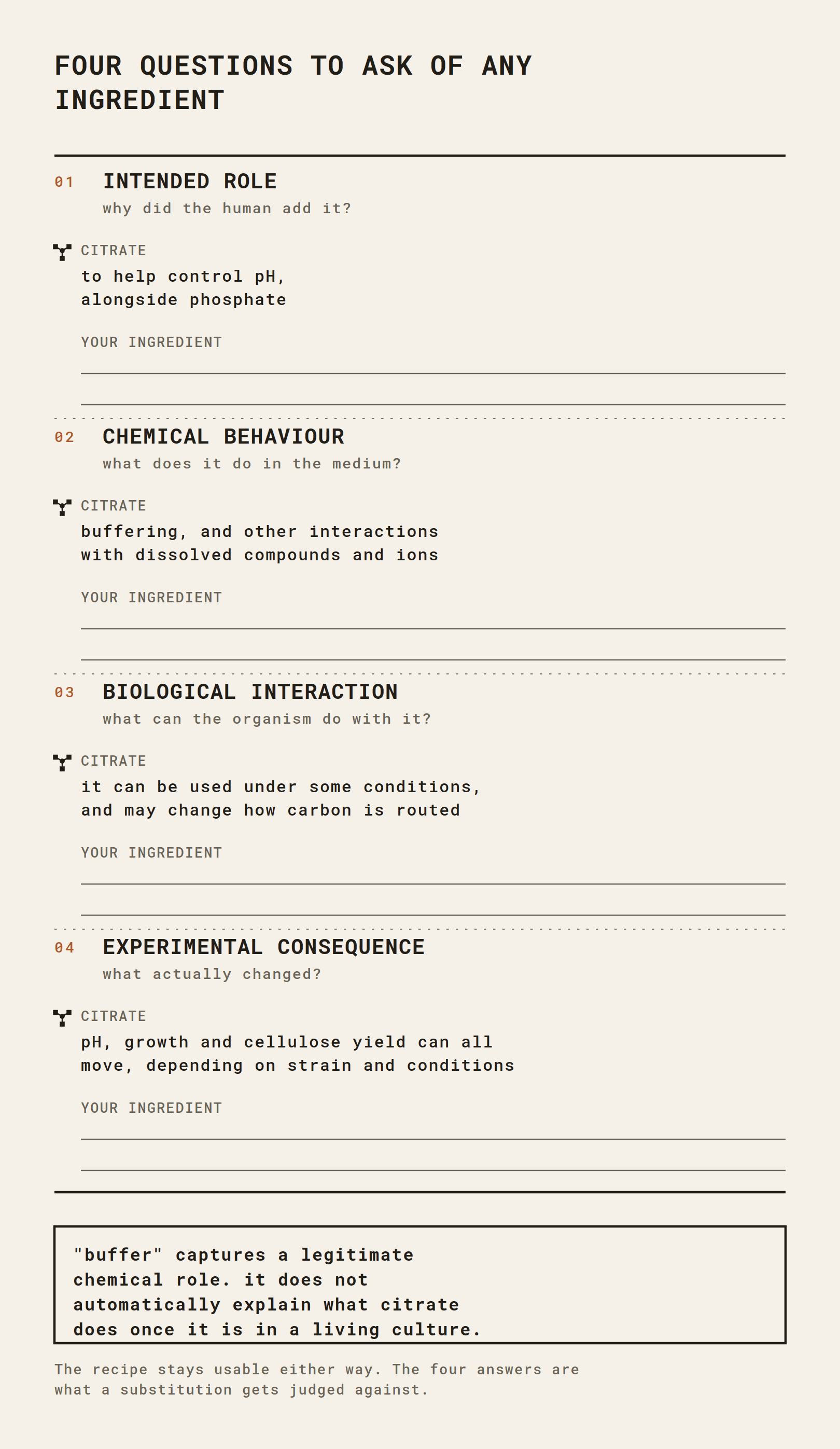
If a protocol says only citric acid: buffer, the procedure might be perfectly reproducible while the explanation remains incomplete. Making a protocol more accessible does not have to mean making the biology more one-dimensional. Instead of asking only what this ingredient is for, I suggest separating four questions.

For citrate: helping control pH alongside phosphate.
For citrate: buffering and other interactions with dissolved compounds and ions.
For citrate: it can be used under some conditions and may affect how the organism processes nutrients.
For citrate: pH, growth and cellulose production can all change, depending on strain and conditions.
The key teaching line: “buffer” captures a legitimate chemical role. It does not automatically explain the biological consequences of citrate being present.
This keeps the recipe usable without pretending the label is complete. Good translation is not about including every possible piece of information. It is about knowing which distinctions must remain visible.
Role overshadowing
Role overshadowing occurs when one legitimate assigned role becomes so dominant that it obscures a component's other interactions and effects within a living system.
The phrase assigned role matters. Protocols are organised around human purposes. We add something because we want it to buffer, solidify, feed, crosslink or stabilise. Those roles tell us why a component is useful to us. But the component is not limited to the job we gave it.
That is what makes citrate interesting. Its buffering role is real. Yet citrate does not stop interacting with the organism because a protocol calls it a buffer. Its other chemical interactions do not disappear. Its effects do not become identical across strains. The biology continues. What becomes narrower is our description of it.
Role overshadowing is therefore harder to detect than simple misinformation. A false claim can be corrected. A correct claim that has become too dominant can pass every fact-check. The question becomes: what else becomes difficult to see once we decide what this component is for?
That question travels well beyond citrate. A scaffold described as structural may also change how cells attach to it. A carbon source may alter more than nutrition. A thickener may also change oxygen movement. A pigment may also be something an organism can transform. The label can be correct without being complete.
What this borrows
Role overshadowing is a new name for a pattern other fields have already noticed. Clinicians describe diagnostic overshadowing: a patient's known condition absorbs a symptom that had a different cause. Psychologists describe verbal overshadowing: putting something into words can make it harder to recognise afterwards. In both, something real and correct sits in front of something else that is also real and still there.
The wider family is older. The nominal fallacy is the habit of treating a name as an explanation. Functional fixedness is the difficulty of seeing a second use for an object once you know its first one. Merton described obliteration by incorporation, where a finding becomes so widely accepted that people stop citing where it came from.
I am not claiming a new psychological mechanism. What I am adding is the design consequence. In a protocol, the assigned role is not only a description. It is the record. And once it is the record, it is what a substitution gets judged against, whether the judging is done by a designer, a database or an optimisation system. That is the step that turns a familiar cognitive pattern into a material decision.
Why this matters for AI and automation
Imagine turning a bacterial-cellulose recipe into structured data.
A software system might reasonably infer that another buffer producing pH 6 is equivalent. The reasoning is internally consistent. The representation is incomplete. For a human, “buffer” may remain shorthand. For an automated system, the encoded role becomes something it can act upon.
Automation makes the categories we give it operational.

If biological protocol databases are going to inform AI, robotic cultivation or automated optimisation, a single function field is probably not enough. At minimum, we should distinguish:
why the ingredient was added;
what it does chemically;
how organisms can interact with it;
what was actually observed experimentally;
strain, concentration and conditions;
how strong the evidence is.
Machines cannot reason with relationships we chose not to represent.
The recipe is already a biological model
Citric acid does not reveal a spectacular mistake. That is why the example is useful. Calling citrate part of a citrate-phosphate buffer system is reasonable. Its buffering role can genuinely improve cellulose production under some conditions (Núñez et al., 2024). But citrate can also be used biologically (Geyer et al., 1994). Its effects differ between strains (Núñez et al., 2024). Changing citrate and changing pH are not always equivalent interventions (Premjet et al., 1999). And Li and colleagues show that stronger pH control can come with changes to the wider chemical environment that themselves affect cellulose production (Li et al., 2021).
The problem begins when buffer stops being one legitimate role and becomes the whole explanation. That is role overshadowing.
Biodesign recipes inevitably simplify living systems. They have to. The challenge is not to eliminate simplification. It is to preserve awareness of what the simplification leaves outside the frame. Students and practitioners need to learn not only how to identify false claims, but how to recognise the limits of true ones.
A recipe is not just a set of instructions. It is already a model of what we think matters. And living systems are under no obligation to respect the categories in that model.
Recipes organise biology around human intentions. Living systems respond to molecules, concentrations, interactions and histories. Those are not the same thing.
Ben-Bassat, A., Bruner, R., Shoemaker, S. P., Aloni, Y., Wong, H., Johnson, D. C., & Naogi, A. N. (1987). Reticulated cellulose product, sheets formed therefrom, methods and microorganisms for their production. European Patent EP0228779A2.
Eichinger, M., Gollob, E., Weichselbaumer, V., Escudero, J., Halusa, K., Weth, A., Baumgartner, W., Braumann, J., & Luible-Bär, C. (2022). Growing whole bacterial cellulose garments with membranes and industrial robotics. Global Fashion Conference 2022. doi: 10.57649/GFC.978-989-54263.
Geyer, U., Klemm, D., & Schmauder, H.-P. (1994). Kinetics of the utilization of different C sources and the cellulose formation by Acetobacter xylinum. Acta Biotechnologica, 14(3), 261-266. doi: 10.1002/abio.370140308.
Gromet-Elhanan, Z., & Hestrin, S. (1963). Synthesis of cellulose by Acetobacter xylinum. VI. Growth on citric acid-cycle intermediates. Journal of Bacteriology, 85(2), 284-292. doi: 10.1128/jb.85.2.284-292.1963.
Hestrin, S., & Schramm, M. (1954). Synthesis of cellulose by Acetobacter xylinum. II. Preparation of freeze-dried cells capable of polymerizing glucose to cellulose. Biochemical Journal, 58(2), 345-352. doi: 10.1042/bj0580345.
Kim, R. (2026). Biodesign Protocol Provenance Dataset, Trace 01: Citrate in Bacterial Cellulose Growth Media [Data set]. Zenodo. https://doi.org/10.5281/zenodo.21985658
Li, Y., Tian, C., Tian, H., Zhang, J., He, X., Ping, W., & Lei, H. (2012). Improvement of bacterial cellulose production by manipulating the metabolic pathways in which ethanol and sodium citrate involved. Applied Microbiology and Biotechnology, 96(6), 1479-1487. doi: 10.1007/s00253-012-4242-6.
Li, Z., Chen, S.-Q., Cao, X., Li, L., Zhu, J., & Yu, H. (2021). Effect of pH buffer and carbon metabolism on the yield and mechanical properties of bacterial cellulose produced by Komagataeibacter hansenii ATCC 53582. Journal of Microbiology and Biotechnology, 31(3), 429-438. doi: 10.4014/jmb.2010.10054.
Mastalerska-Scholz, M., Duda, S., & Gennett, A. (2026). Biodesign manuals as translational scaffolds in fungal biodesign education: A case study of transdisciplinary teaching. Research Directions: Biotechnology Design. doi: 10.1017/S2977905726100717.
Morrow, R., Ribul, M., Eastmond, H., Lanot, A., & Baurley, S. (2023). Bio-producing bacterial cellulose filaments through co-designing with biological characteristics. Materials, 16(14), 4893. doi: 10.3390/ma16144893.
Núñez, D., Oyarzún, P., Cáceres, R., Elgueta, E., & Gamboa, M. (2024). Citrate-buffered Yamanaka medium allows to produce high-yield bacterial nanocellulose in static culture using Komagataeibacter strains isolated from apple cider vinegar. Frontiers in Bioengineering and Biotechnology, 12, 1375984. doi: 10.3389/fbioe.2024.1375984.
Premjet, S., Shimamoto, A., Ohtani, Y., & Sameshima, K. (1999). The importance of TCA cycle related acids in bacterial cellulose production. Sen'i Gakkaishi, 55(1), 7-12. doi: 10.2115/fiber.55.7.
Ring, D. F., Nashed, W., & Dow, T. (1986). Liquid loaded pad for medical applications. U.S. Patent US4588400A.
Sicher, E. (2026). “How can SCOBY be grown from scratch?”: Growing materials from situated ecologies. Research Directions: Biotechnology Design, 4, e17. doi: 10.1017/S2977905726100225.
Sicher, E., & Conterno, L. (2026). Medium design as a fundamental domain in Biodesign: Open-source protocols for exploring SCOBY growth with alternative plant infusions. Research Directions: Biotechnology Design, 4, e38. doi: 10.1017/S2977905726100237.
From the Molecule Up, by Biodesign Academy. Read one living material with care, as a relation you are joining, then meet the next on its own terms.
What citric acid reveals about bacterial cellulose
Role overshadowing: when the job we assign an ingredient is correct, and its correctness is what stops us looking any further.
Citric acid sits in the standard recipe for growing bacterial cellulose, and every protocol that gives it a job calls it a buffer. That is chemically true. It is also the only thing most protocols say about it.
In 1999 a group working across Thailand and Japan tested it. They raised the buffer level until the pH held a full unit better, and the cellulose yield did not move. Their conclusion says the buffer components “do not sufficiently work as pH regulator” and that the citric acid itself promoted the synthesis. Nobody downstream picked that up. The label carried on.
In 2024 a strain whose pH barely dropped still doubled its yield when citrate went in. Whatever citrate is doing, pH does not cover it. I call this role overshadowing. Swap the ingredient and you have changed the environment, even when the meter reads the same.
There is a short, free explainer of the term, written for someone arriving without the full case: Can I replace citric acid in a bacterial cellulose medium?
A bacterial-cellulose recipe can look reassuringly modular.
This is useful. Recipes have to simplify biology to make it workable. The problem starts when a label is correct enough that we stop asking what else might be happening.
Citric acid is a good example. In bacterial-cellulose media, citrate and phosphate can help control pH. The researchers behind the classic Hestrin-Schramm medium clearly understood this buffering chemistry (Hestrin & Schramm, 1954). So if a protocol describes citrate as part of the buffer system, that is not necessarily wrong.
But several design decisions can follow from that description.
Replace citrate if another buffer maintains the same pH.
Increase citrate if the culture becomes too acidic.
Automate citrate dosing according to a pH sensor.
Ask an optimisation system to find an equivalent buffer.
All are reasonable if buffering captures everything about citrate that matters to the culture. The evidence suggests it does not. The buffering role is chemically legitimate. But once citrate enters a living culture, buffer is no longer a complete description.
The organism encounters a molecule, not a recipe label.
The buffer works, but that does not explain the culture
Hestrin-Schramm medium, one of the best-known formulations for growing bacterial cellulose, contains glucose, peptone, yeast extract, disodium phosphate and citric acid, starting at around pH 6 (Hestrin & Schramm, 1954). A useful experiment by Premjet and colleagues later treated citrate and phosphate explicitly as the buffer system and investigated what happened when those components were changed (Premjet et al., 1999).
A simple model might predict: better buffering, so better pH control, so better growth conditions, so more bacterial cellulose. That is not what happened.
Under their conditions, standard HS medium started at about pH 6 and fell to roughly pH 3.7. More importantly, changing citrate and phosphate produced different effects on cellulose production. Improving the buffering conditions did not simply produce more cellulose (Premjet et al., 1999).
The distinction matters.
The first does not automatically establish the second. Premjet and colleagues suggested that metabolism, the chemical processes through which an organism uses nutrients and produces energy and material, might help explain some of the differences. But they did not fully establish one mechanism.
A correct account of why an ingredient was added does not necessarily explain everything that happens after it enters a living system.
The role does not need to be false. It only needs to become so convincing that we stop looking beyond it.
Better pH control changes other things too
A 2021 study using Komagataeibacter hansenii makes this problem even clearer. Li and colleagues compared different buffer systems and concentrations. At relatively low ionic strength, substantial cellulose could still be produced even though the culture acidified considerably. When buffer concentrations were increased enough to stabilise pH more strongly, cellulose synthesis could collapse (Li et al., 2021).
The important point is that the experiment did not isolate pH as the only thing changing. Increasing buffer concentration also changed the ionic environment of the culture. So the study should not be read as evidence that citrate itself suppresses bacterial cellulose. In fact, one of the lower-ionic-strength phosphate conditions still contained citrate and produced substantial cellulose.
Optimising one measurable parameter can change other parts of the biological environment at the same time.
That is a design principle far beyond citrate. We often make substitutions by matching one measurable property: same pH, therefore equivalent medium; same moisture, therefore equivalent substrate; same stiffness, therefore equivalent scaffold.
Matching parameters is essential in experiments. But matching one parameter does not make two biological environments identical. A pH meter tells us something important about a medium. It does not tell us which molecules are available to the organism, which ones it can use, how concentrated the dissolved salts are, or what other chemical relationships have changed.
So if we replace citrate-phosphate with another system that maintains exactly the same pH, we may still have changed:
which molecules are available;
the salts and ions in the medium;
access to some metals;
the concentration of dissolved material;
what the organism can use or process.
The replacement may work perfectly well. It may even work better. But it is not biologically neutral simply because the pH matches.
Citrate is not only encountered as a buffer
There is another reason to resist treating citrate purely through its pH-control role. Bacterial-cellulose-producing organisms can interact with citrate biologically. Geyer and colleagues reported that Acetobacter xylinum could use citrate in Schramm-Hestrin medium, particularly in late-phase cultivation (Geyer et al., 1994).
That means citrate is not always just background chemistry. But this creates another tempting simplification. If “citrate = buffer” is incomplete, perhaps the correction is citrate = carbon source. That is no better.
Earlier work by Gromet-Elhanan and Hestrin showed that A. xylinum used different organic acids very differently, and citrate was a relatively poor food source under some conditions (Gromet-Elhanan & Hestrin, 1963). Later experiments involving sodium citrate and ethanol also suggest that citrate can affect how the organism processes carbon, but they do not prove one simple pathway from citrate to more cellulose (Li et al., 2012).
What citrate does depends on the organism and the conditions. Replacing one dominant label with another merely repeats the problem.
Strain matters
A 2024 study comparing several Komagataeibacter strains illustrates this especially well (Núñez et al., 2024). For two isolates, citrate buffering reduced strong acidification and greatly improved bacterial-cellulose production. Here, buffering clearly mattered.
But another strain behaved differently. Its unbuffered culture already maintained a relatively stable pH, yet adding citrate still roughly doubled cellulose production.
A citrate effect is not always the same thing as a pH effect.
The study does not tell us exactly why. That uncertainty is useful. It reminds us that “bacterial cellulose” is not one fixed biological system. Different strains of the bacteria that produce it can respond differently to the same conditions. Change the strain and the same recipe can behave differently. Change the medium and the same strain can behave differently. The material category can hide the living organism underneath it.
A recipe substitution is an ecological intervention
This becomes especially important when bacterial cellulose moves from straightforward laboratory cultivation into biodesign. Designers may change recipes because an ingredient is expensive, unavailable, unsuitable for a fabrication process, difficult to pump, or inconvenient in a workshop.
It is tempting to think in terms of interchangeable jobs: buffer for buffer, carbon source for carbon source, thickener for thickener. But the organism does not experience jobs. It experiences an environment, and changing one ingredient changes part of that environment.
This matters when bacterial cellulose is being grown around textiles, through membranes, into filaments or within robotic fabrication systems (Morrow et al., 2023; Eichinger et al., 2022). Here the culture recipe is no longer just a biological recipe. It becomes part of the fabrication system. If medium composition changes growth rate, shape or timing, that can affect when a machine acts, when a scaffold becomes covered, or when the material is ready to handle.
A small recipe assumption can therefore become a design decision.
From mechanism accretion to role overshadowing
This Reading follows an earlier investigation into gypsum in mycelium cultivation. You do not need to have read that piece to understand the distinction.
The gypsum investigation started with a familiar recipe claim: that adding gypsum to mushroom or mycelium substrate reduces or regulates pH. Tracing that explanation backwards revealed a problem. Gypsum certainly had a long history of use, but the increasingly specific pH explanation attached to it was much harder to support. As recipes and explanations were repeated, additional certainty and mechanistic detail accumulated around the ingredient.
Mechanism accretion occurs when repeated explanations accumulate layers of mechanistic certainty beyond what the underlying evidence can support.
Citrate initially looked as though it might be another example. It is not. Hestrin and Schramm's 1954 bacterial-cellulose work includes the familiar combination of glucose, peptone, yeast extract, disodium phosphate and citric acid (Hestrin & Schramm, 1954). Their growth-medium recipe does not neatly assign a job to every ingredient. But elsewhere in the same work they explicitly use phosphate-citrate buffer at pH 6. So there is little basis for arguing that citrate's buffering role is a later mechanistic story built on weak foundations. The chemistry was understood.
The recipe then travelled. A Johnson & Johnson patent filed in 1982 and published in 1986 reproduced the HS formulation, including 1.15 g/L citric acid, without explaining citrate in detail (Ring et al., 1986). A later patent explicitly discussed citrate among buffers used for pH control in bacterial-cellulose cultivation (Ben-Bassat et al., 1987). By 1999, Premjet and colleagues were explicitly describing citrate and phosphate as buffer components and testing their effects (Premjet et al., 1999).
The full trace, document by document, with what each one states about citric acid and what it justifies, is deposited as a dataset: https://doi.org/10.5281/zenodo.21985658
There is no obvious misinformation chain here. Instead, citrate exposes a different failure mode. With gypsum, an explanation became more certain as it travelled. With citrate, a correct explanation can become so dominant that we stop asking what else is happening.
The two can look similar in a recipe because both eventually produce a neat ingredient-function pairing. But they require different questions.
When protocols enter design, what becomes visible?
A design paper may be investigating a filament, garment, membrane or robotic process. The growth medium is necessary infrastructure rather than the main research question. That is reasonable. But biological assumptions can become quieter as fabrication becomes more visible.
Morrow and colleagues, for example, investigate bacterial cellulose grown directly into filament form. Their paper reports an HS formulation containing 1.5 g/L citric acid, rather than the roughly 1.15 g/L commonly reproduced from the historical formulation (Morrow et al., 2023). The difference should not automatically be treated as an error. Nor should its origin be assigned to Morrow without tracing the formulation further upstream.
The label “HS medium” can remain stable while the recipe attached to that label changes.
Protocol names can give an impression of continuity that the detailed formulations do not always deserve.
A recent study of fungal biodesign education makes the wider translation problem particularly visible. Mastalerska-Scholz, Duda and Gennett (2026) studied a mixed-background biodesign course and found that conventional laboratory protocols often assume knowledge that novice designers do not yet have: how to recognise contamination, judge whether a procedure has worked, or interpret unexpected growth. The authors describe this as part of a wider mismatch between laboratory procedures and novice practitioners in transdisciplinary education.
Their response is the Biodesign Manual: a visual, assembly-manual-like version of the laboratory protocol designed to help non-biologists follow biological procedures more independently. The manuals are intended as scaffolds rather than replacements for instruction or supervision. Crucially, the authors say that the aim of this simplification is not to reduce biological complexity. It is to make procedural knowledge easier to access.
When we translate biological knowledge into something easier to act upon, what do we choose to make visible?
A manual can successfully explain what to do while a label such as citric acid: buffer still quietly shapes what we think the ingredient does. This is not an argument against simplifying protocols. It is an argument for being more deliberate about what survives the simplification.
The same issue becomes more consequential when bacterial-cellulose growth is coupled to membranes and industrial robotics (Eichinger et al., 2022). Once cultivation becomes machine-mediated, assumptions within the recipe can influence the fabrication process itself.
SCOBY does not escape the problem
Many biodesigners do not use HS medium at all. They work with SCOBY cultures, plant infusions, sugar, starter liquid and acids. Recent biodesign research has begun treating the medium itself as something that can be designed rather than neutral background infrastructure. Different plant sources and concentrations can produce different growth and material outcomes (Sicher, 2026; Sicher & Conterno, 2026).
Mixed microbial cultures make the one-ingredient, one-role model even harder to sustain. Changing the medium changes the environment in which several kinds of microorganisms live together.
The broader educational problem is therefore not that biodesigners incorrectly believe citrate is a buffer. There is little evidence for that. The deeper issue is that we tend to teach biologically active ingredients through the single role that matters most to the recipe. That makes protocols easier to understand. But it can also make ingredients appear more interchangeable than living systems allow.
A better way to read a biological recipe
The Biodesign Manual work offers a useful starting principle: information that an experienced laboratory practitioner carries implicitly often needs to be made visible when a protocol is handed to a novice (Mastalerska-Scholz et al., 2026). The same principle can be applied to ingredient roles.
If a protocol says only citric acid: buffer, the procedure might be perfectly reproducible while the explanation remains incomplete. Making a protocol more accessible does not have to mean making the biology more one-dimensional. Instead of asking only what this ingredient is for, I suggest separating four questions.
For citrate: helping control pH alongside phosphate.
For citrate: buffering and other interactions with dissolved compounds and ions.
For citrate: it can be used under some conditions and may affect how the organism processes nutrients.
For citrate: pH, growth and cellulose production can all change, depending on strain and conditions.
The key teaching line: “buffer” captures a legitimate chemical role. It does not automatically explain the biological consequences of citrate being present.
This keeps the recipe usable without pretending the label is complete. Good translation is not about including every possible piece of information. It is about knowing which distinctions must remain visible.
Role overshadowing
Role overshadowing occurs when one legitimate assigned role becomes so dominant that it obscures a component's other interactions and effects within a living system.
The phrase assigned role matters. Protocols are organised around human purposes. We add something because we want it to buffer, solidify, feed, crosslink or stabilise. Those roles tell us why a component is useful to us. But the component is not limited to the job we gave it.
That is what makes citrate interesting. Its buffering role is real. Yet citrate does not stop interacting with the organism because a protocol calls it a buffer. Its other chemical interactions do not disappear. Its effects do not become identical across strains. The biology continues. What becomes narrower is our description of it.
Role overshadowing is therefore harder to detect than simple misinformation. A false claim can be corrected. A correct claim that has become too dominant can pass every fact-check. The question becomes: what else becomes difficult to see once we decide what this component is for?
That question travels well beyond citrate. A scaffold described as structural may also change how cells attach to it. A carbon source may alter more than nutrition. A thickener may also change oxygen movement. A pigment may also be something an organism can transform. The label can be correct without being complete.
What this borrows
Role overshadowing is a new name for a pattern other fields have already noticed. Clinicians describe diagnostic overshadowing: a patient's known condition absorbs a symptom that had a different cause. Psychologists describe verbal overshadowing: putting something into words can make it harder to recognise afterwards. In both, something real and correct sits in front of something else that is also real and still there.
The wider family is older. The nominal fallacy is the habit of treating a name as an explanation. Functional fixedness is the difficulty of seeing a second use for an object once you know its first one. Merton described obliteration by incorporation, where a finding becomes so widely accepted that people stop citing where it came from.
I am not claiming a new psychological mechanism. What I am adding is the design consequence. In a protocol, the assigned role is not only a description. It is the record. And once it is the record, it is what a substitution gets judged against, whether the judging is done by a designer, a database or an optimisation system. That is the step that turns a familiar cognitive pattern into a material decision.
Why this matters for AI and automation
Imagine turning a bacterial-cellulose recipe into structured data.
A software system might reasonably infer that another buffer producing pH 6 is equivalent. The reasoning is internally consistent. The representation is incomplete. For a human, “buffer” may remain shorthand. For an automated system, the encoded role becomes something it can act upon.
Automation makes the categories we give it operational.
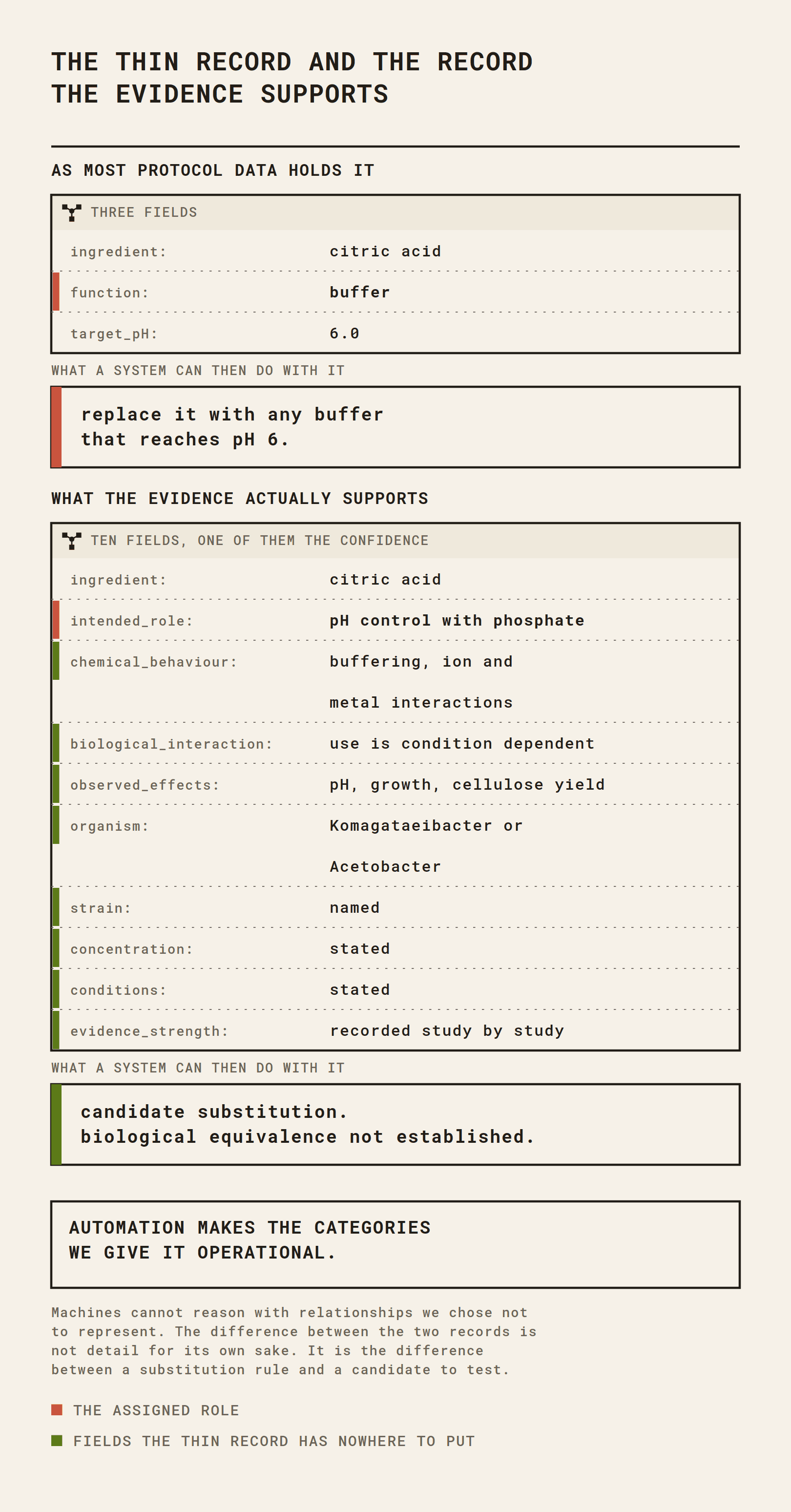
If biological protocol databases are going to inform AI, robotic cultivation or automated optimisation, a single function field is probably not enough. At minimum, we should distinguish:
why the ingredient was added;
what it does chemically;
how organisms can interact with it;
what was actually observed experimentally;
strain, concentration and conditions;
how strong the evidence is.
Machines cannot reason with relationships we chose not to represent.
The recipe is already a biological model
Citric acid does not reveal a spectacular mistake. That is why the example is useful. Calling citrate part of a citrate-phosphate buffer system is reasonable. Its buffering role can genuinely improve cellulose production under some conditions (Núñez et al., 2024). But citrate can also be used biologically (Geyer et al., 1994). Its effects differ between strains (Núñez et al., 2024). Changing citrate and changing pH are not always equivalent interventions (Premjet et al., 1999). And Li and colleagues show that stronger pH control can come with changes to the wider chemical environment that themselves affect cellulose production (Li et al., 2021).
The problem begins when buffer stops being one legitimate role and becomes the whole explanation. That is role overshadowing.
Biodesign recipes inevitably simplify living systems. They have to. The challenge is not to eliminate simplification. It is to preserve awareness of what the simplification leaves outside the frame. Students and practitioners need to learn not only how to identify false claims, but how to recognise the limits of true ones.
A recipe is not just a set of instructions. It is already a model of what we think matters. And living systems are under no obligation to respect the categories in that model.
Recipes organise biology around human intentions. Living systems respond to molecules, concentrations, interactions and histories. Those are not the same thing.
Ben-Bassat, A., Bruner, R., Shoemaker, S. P., Aloni, Y., Wong, H., Johnson, D. C., & Naogi, A. N. (1987). Reticulated cellulose product, sheets formed therefrom, methods and microorganisms for their production. European Patent EP0228779A2.
Eichinger, M., Gollob, E., Weichselbaumer, V., Escudero, J., Halusa, K., Weth, A., Baumgartner, W., Braumann, J., & Luible-Bär, C. (2022). Growing whole bacterial cellulose garments with membranes and industrial robotics. Global Fashion Conference 2022. doi: 10.57649/GFC.978-989-54263.
Geyer, U., Klemm, D., & Schmauder, H.-P. (1994). Kinetics of the utilization of different C sources and the cellulose formation by Acetobacter xylinum. Acta Biotechnologica, 14(3), 261-266. doi: 10.1002/abio.370140308.
Gromet-Elhanan, Z., & Hestrin, S. (1963). Synthesis of cellulose by Acetobacter xylinum. VI. Growth on citric acid-cycle intermediates. Journal of Bacteriology, 85(2), 284-292. doi: 10.1128/jb.85.2.284-292.1963.
Hestrin, S., & Schramm, M. (1954). Synthesis of cellulose by Acetobacter xylinum. II. Preparation of freeze-dried cells capable of polymerizing glucose to cellulose. Biochemical Journal, 58(2), 345-352. doi: 10.1042/bj0580345.
Kim, R. (2026). Biodesign Protocol Provenance Dataset, Trace 01: Citrate in Bacterial Cellulose Growth Media [Data set]. Zenodo. https://doi.org/10.5281/zenodo.21985658
Li, Y., Tian, C., Tian, H., Zhang, J., He, X., Ping, W., & Lei, H. (2012). Improvement of bacterial cellulose production by manipulating the metabolic pathways in which ethanol and sodium citrate involved. Applied Microbiology and Biotechnology, 96(6), 1479-1487. doi: 10.1007/s00253-012-4242-6.
Li, Z., Chen, S.-Q., Cao, X., Li, L., Zhu, J., & Yu, H. (2021). Effect of pH buffer and carbon metabolism on the yield and mechanical properties of bacterial cellulose produced by Komagataeibacter hansenii ATCC 53582. Journal of Microbiology and Biotechnology, 31(3), 429-438. doi: 10.4014/jmb.2010.10054.
Mastalerska-Scholz, M., Duda, S., & Gennett, A. (2026). Biodesign manuals as translational scaffolds in fungal biodesign education: A case study of transdisciplinary teaching. Research Directions: Biotechnology Design. doi: 10.1017/S2977905726100717.
Morrow, R., Ribul, M., Eastmond, H., Lanot, A., & Baurley, S. (2023). Bio-producing bacterial cellulose filaments through co-designing with biological characteristics. Materials, 16(14), 4893. doi: 10.3390/ma16144893.
Núñez, D., Oyarzún, P., Cáceres, R., Elgueta, E., & Gamboa, M. (2024). Citrate-buffered Yamanaka medium allows to produce high-yield bacterial nanocellulose in static culture using Komagataeibacter strains isolated from apple cider vinegar. Frontiers in Bioengineering and Biotechnology, 12, 1375984. doi: 10.3389/fbioe.2024.1375984.
Premjet, S., Shimamoto, A., Ohtani, Y., & Sameshima, K. (1999). The importance of TCA cycle related acids in bacterial cellulose production. Sen'i Gakkaishi, 55(1), 7-12. doi: 10.2115/fiber.55.7.
Ring, D. F., Nashed, W., & Dow, T. (1986). Liquid loaded pad for medical applications. U.S. Patent US4588400A.
Sicher, E. (2026). “How can SCOBY be grown from scratch?”: Growing materials from situated ecologies. Research Directions: Biotechnology Design, 4, e17. doi: 10.1017/S2977905726100225.
Sicher, E., & Conterno, L. (2026). Medium design as a fundamental domain in Biodesign: Open-source protocols for exploring SCOBY growth with alternative plant infusions. Research Directions: Biotechnology Design, 4, e38. doi: 10.1017/S2977905726100237.
From the Molecule Up, by Biodesign Academy. Read one living material with care, as a relation you are joining, then meet the next on its own terms.
